Way of the Engineerrior
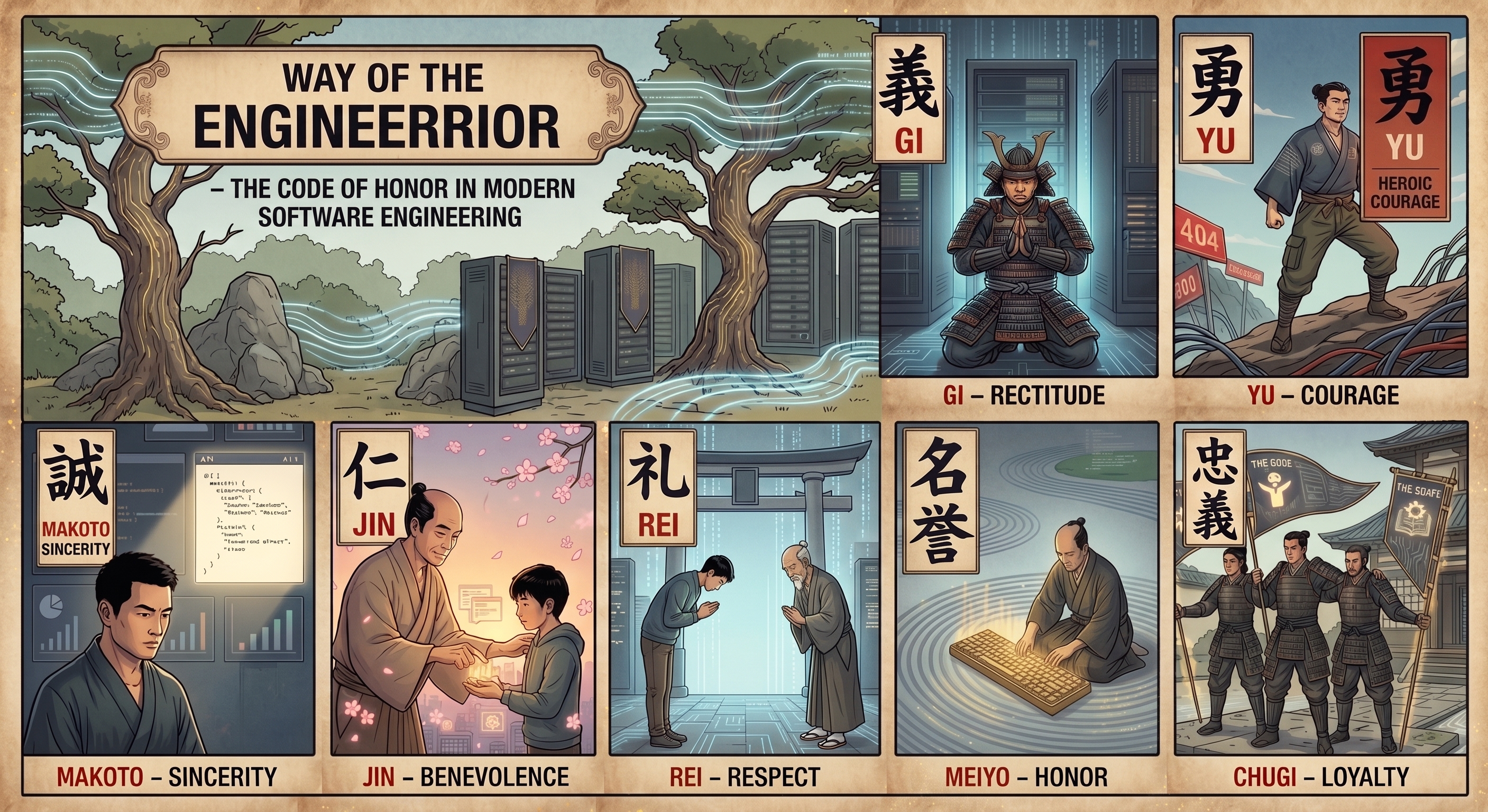
I have been working in software development field for over two decades. I have had the opportunity to collaborate with dozens of companies varying in scale, capital, industry, and internal processes. There is a wealth of documents, books, and articles dedicated to the wide range of values - whether business values, customer-facing values, or corporate values - that guide these companies.
There are many excellent books for software engineers that help guide decision-making during software development, maintain code cleanliness, and foster an understanding of software system design and architecture principles. Some of these go beyond purely technical skills to address interpersonal interaction and communication - skills essential for effective work and professional growth.
Yet, despite this endless library of best practices, framework guides, and agile manifestos, something fundamental is missing from the modern developer’s daily reality.
We live in an era of relentless hype cycles, AI-generated code slop, corporate agility theater, and architectural over-engineering driven by ego rather than necessity. When the pressure hits, when production crashes, or when deadlines demand cutting corners that will haunt your team for years, design patterns won't save your spirit.
What we need isn't another framework. We need an internal philosophy - an unshakeable code of honor. We need the Way of the Engineerrior.
Inspired by Bushido, the ancient code of the samurai, here are the seven precepts adapted for modern software engineers.
1. 義 (Gi) Rectitude
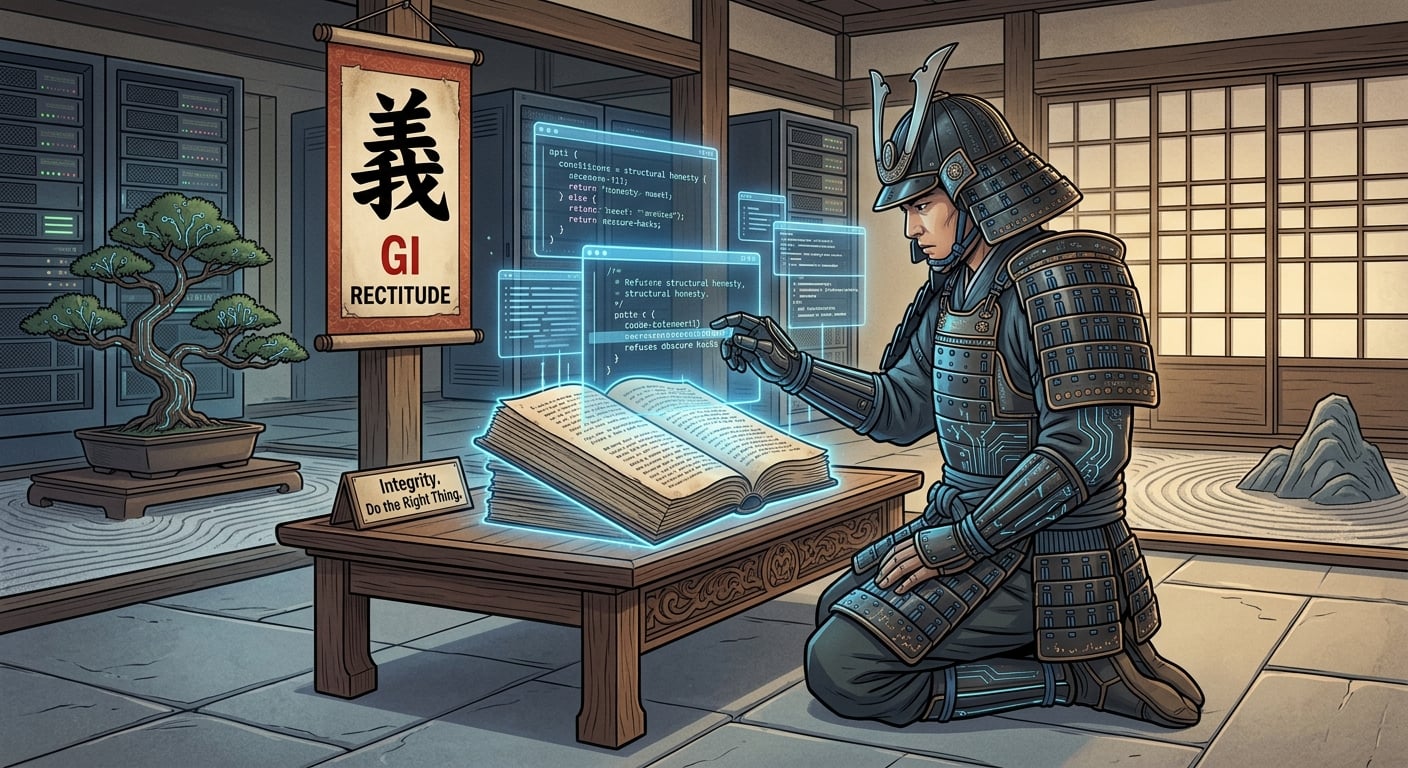
Doing the right thing when nobody is watching.
Integrity in software is the refusal to sweep architectural debt under the rug just to hit an arbitrary quarterly KPI. It means calling out vanity metrics, refusing to build deceptive dark patterns into UI, and standing up for system stability when business pressure begs for quick hacks.
An Engineerrior does not write code to fool the code reviewer or pass unit tests through mocked-out illusions. You build with structural honesty, knowing that every hack you ship today is a tax levied on the developers of tomorrow.
2. 勇 (Yu) Courage
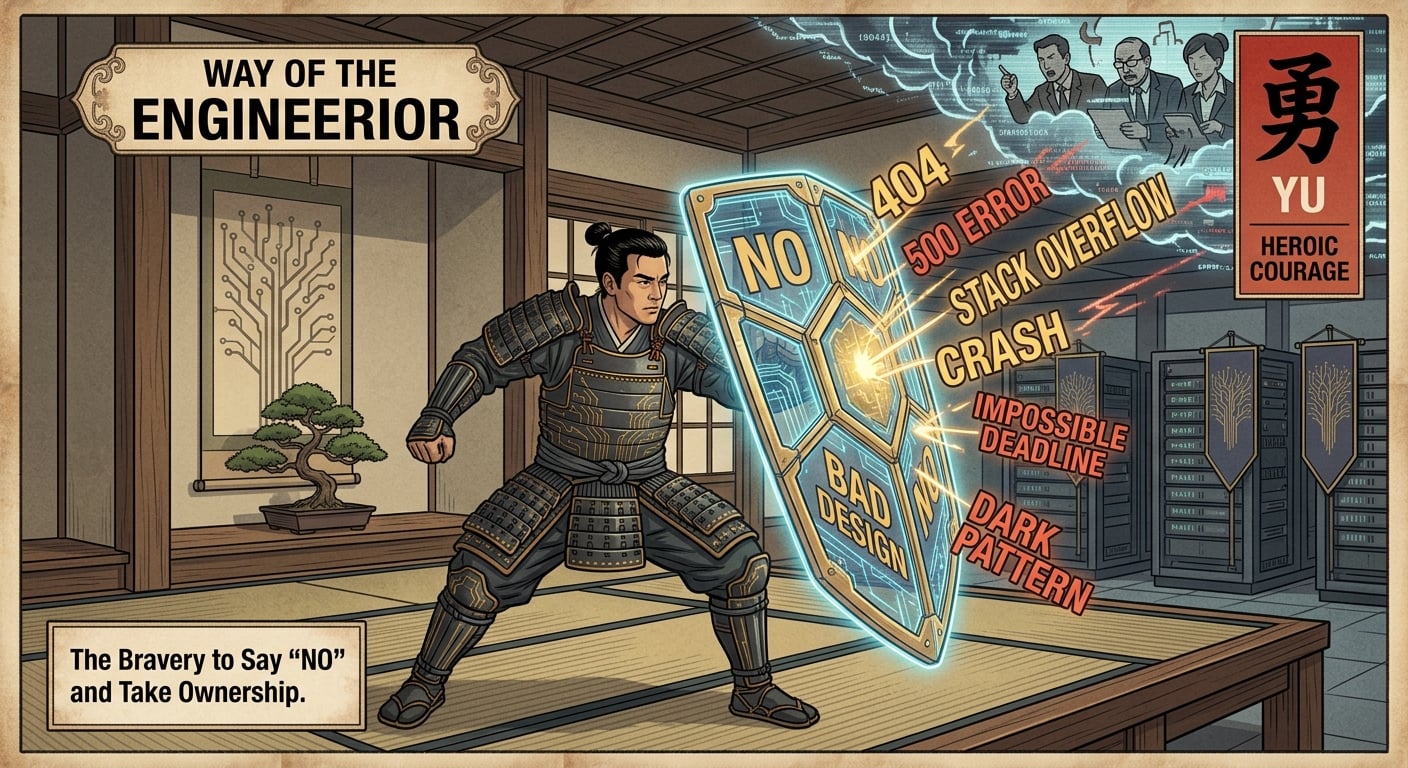
The bravery to say "no" and the courage to take ownership.
Courage isn't blindly agreeing to impossible deadlines while silently burning out - that's passivity. Courage is sitting in a room of stakeholders, looking them in the eye, and saying: "No. That architecture won't hold, and shipping it on Friday will break the business."
Courage is refactoring that terrifying legacy monolith that everyone else treats like a radioactive zone. Courage is deploying when you’ve done the work, admitting when your initial design failed, and taking full accountability when your change brings down production. Fear is natural in complex systems; courage is engineering right through it.
3. 仁 (Jin) Benevolence
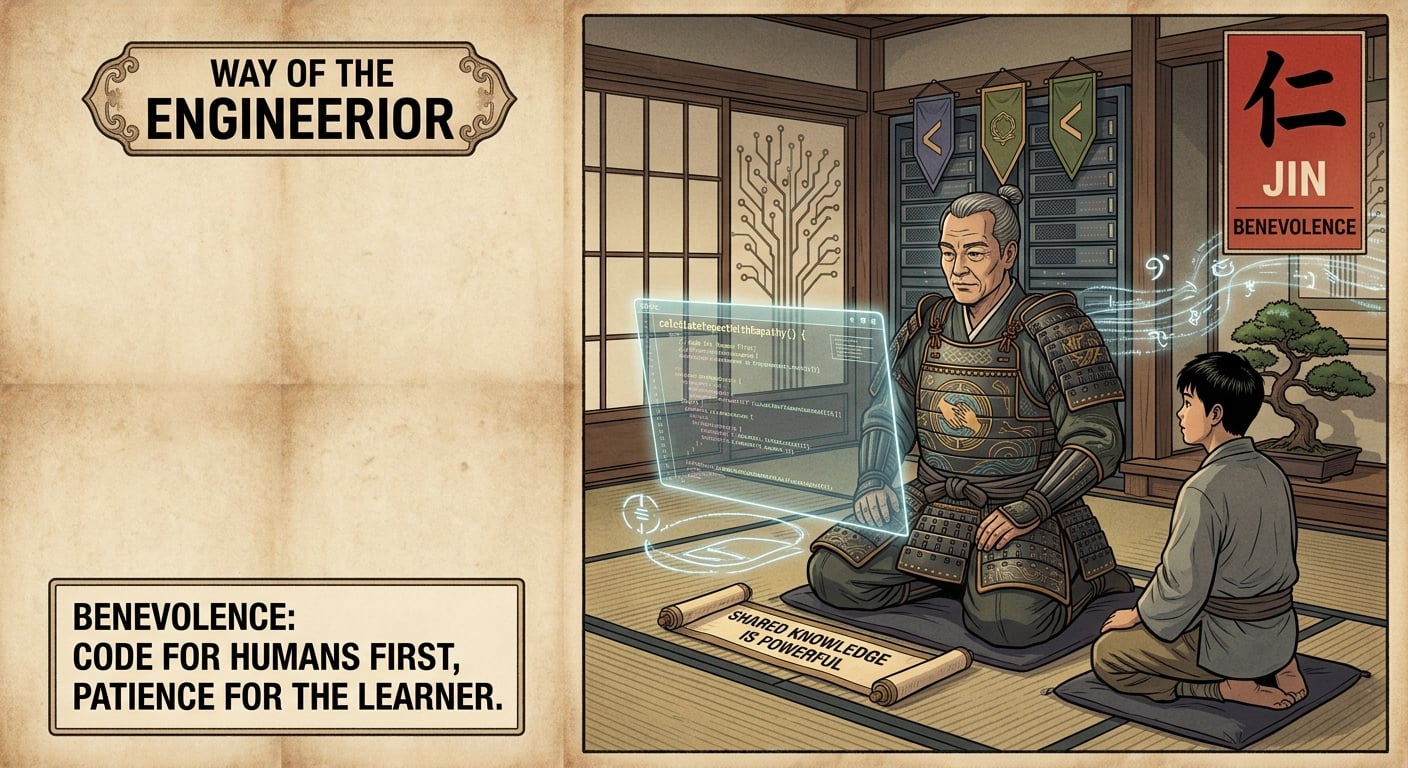
Code is written for humans first, computers second.
A clever algorithm that only you understand isn't a masterpiece; it's an exercise in selfishness. Benevolence means having empathy for the poor soul who has to debug your code three years from now - or the tired engineer on-call tonight.
It means writing clean documentation, mentoring juniors without condescension, and designing interfaces that make the user's life easier rather than fulfilling your own architectural fantasies. True power in engineering lies in making complex systems simple and approachable for others.
4. 礼 (Rei) Respect
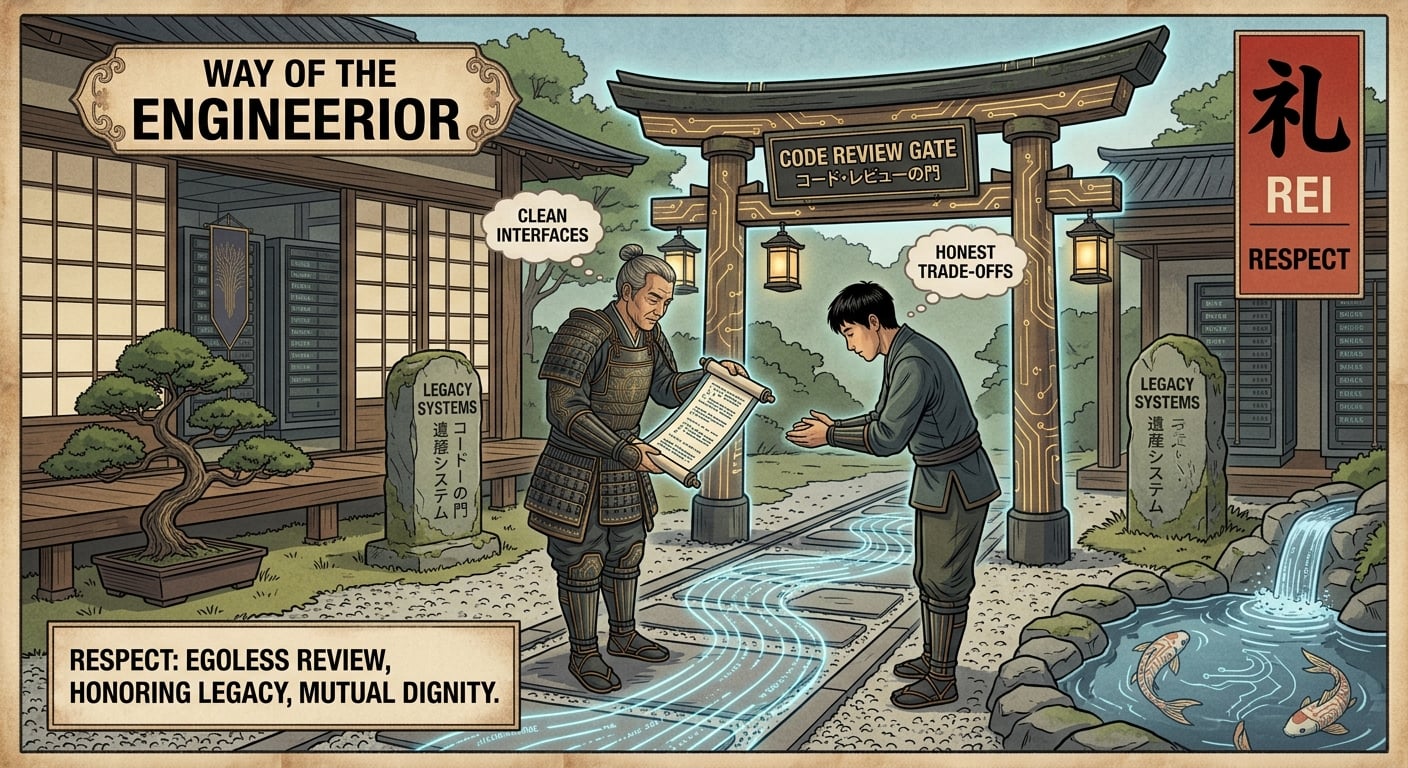
Egoless collaboration in a world of loud opinion.
The tech industry is rife with intellectual arrogance. We’ve all seen pull request reviews that read like personal insults, or senior engineers who treat product managers like adversaries.
Respect means entering code reviews with curiosity, not malice. It means respecting the context of legacy code - realizing that code you think is "garbage" was built under constraints and pressure you weren't there to experience, and it paid the company's bills so you could be hired. Respect bridge-builders, respect domain experts, and treat your teammates as allies in battle, not obstacles.
5. 誠 (Makoto) Sincerity
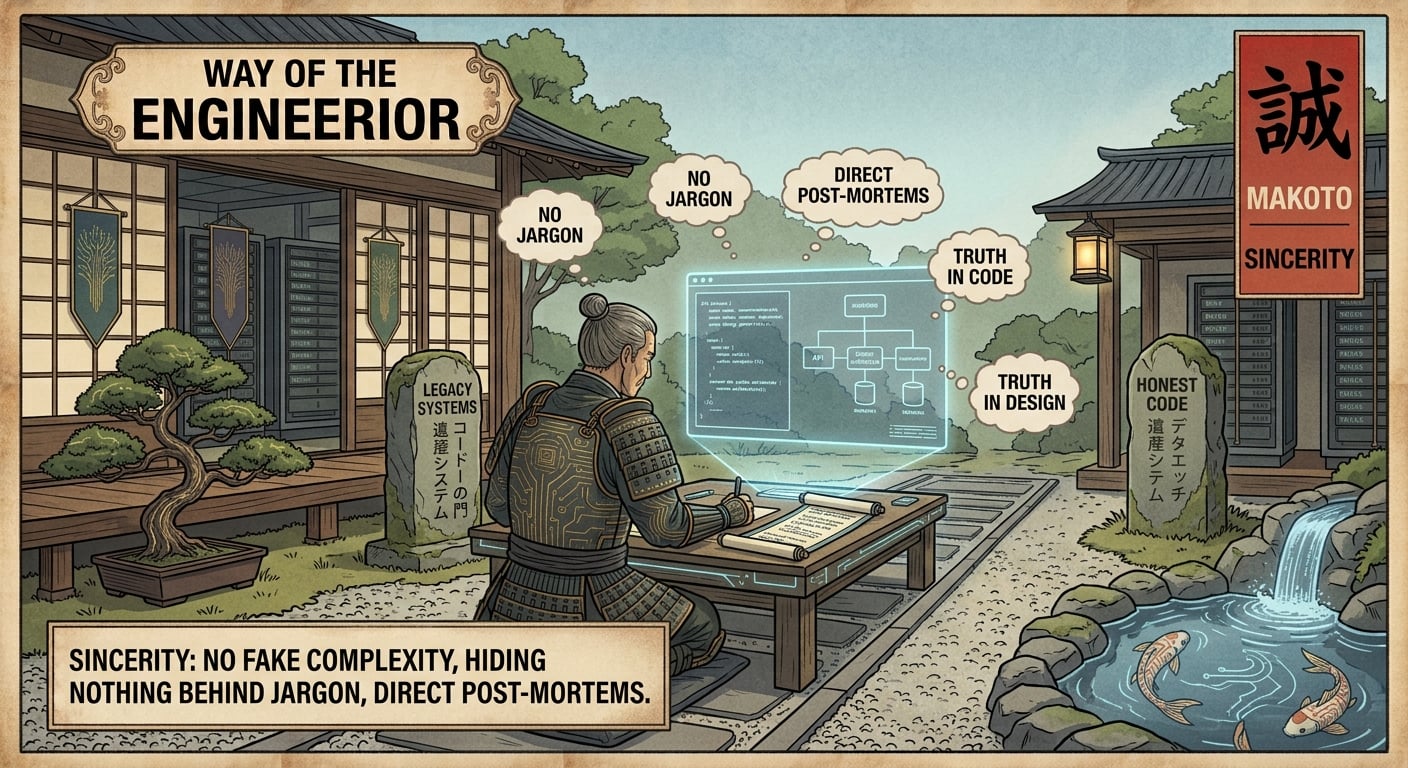
No fake complexity, no hiding behind jargon.
When an Engineerrior speaks, their word carries weight. You don't inflated story point estimates to buy slack time to browse Reddit; you don't use complex distributed architecture just to pad your resume (Resume-Driven Development).
When something breaks, you don't say "it works on my machine" or hide behind vague corporate speak. You conduct post-mortems focused on root causes rather than blame-shifting. Absolute sincerity means being honest with yourself about what you know, what you don't know, and the real limits of the systems you build.
6. 名誉 (Meiyo) Honor
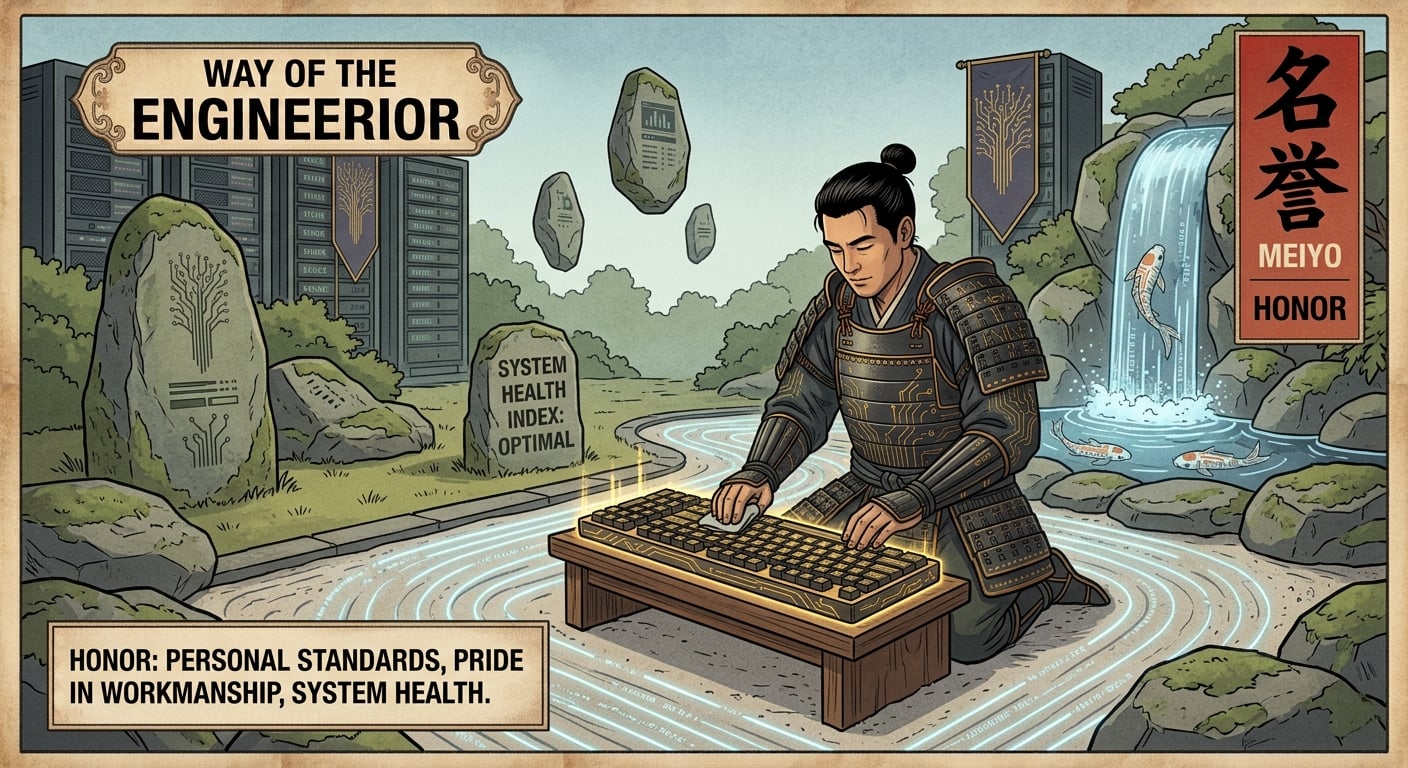
Pride in the work, beyond the paycheck.
Honor is your internal standard of excellence. It's the quiet satisfaction of a well-crafted domain model, a squeaky-clean pipeline, an elegant API contract, and a zero-downtime deployment.
While the industry pushes for faster churn and disposable code, an Engineerrior treats code as a reflection of their personal standard. You take pride in system health, low latency, and operational resilience - not because management rewarded you for it, but because shipping sloppy work damages your own professional pride.
7. 忠義 (Chugi) Loyalty
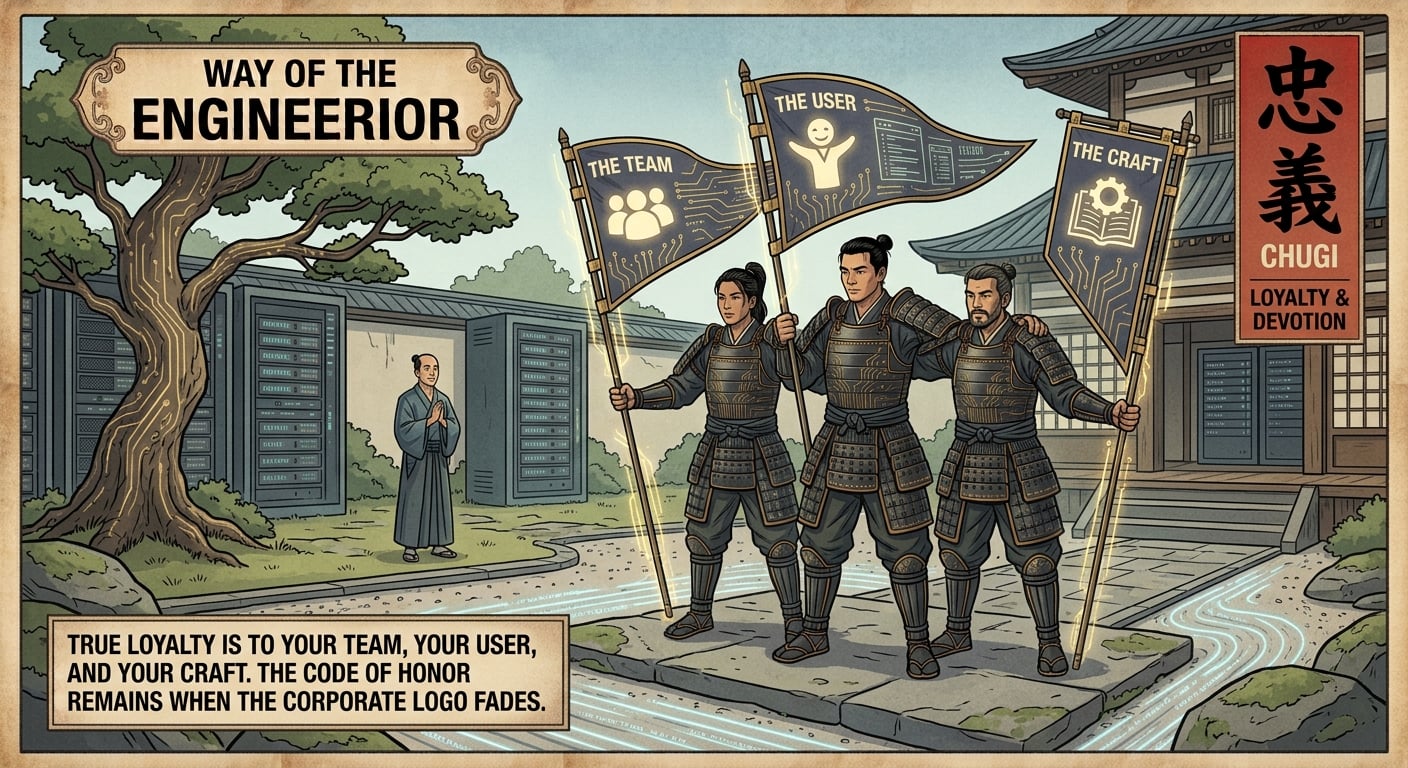
Loyalty to the craft and the team, not the corporate logo.
Companies come and go, reorganizations happen, and tech stacks shift overnight. Blind loyalty to a corporate brand or a specific framework (whether it’s .NET, React, or Kubernetes) is a trap.
Your loyalty belongs to three things: your team, your craft, and the end-users who rely on your software. Stand by your peers in the trenches, defend the team's engineering standards, and remain devoted to continuous learning. Tech will evolve, but your dedication to mastery remains permanent.
The Master's Path
Software engineering isn't just about cranking out tickets in Jira or feeding prompts into an AI assistant. It is a discipline of mind, logic, and endurance.
When you adopt the Way of the Engineerrior, you stop viewing yourself as a cog in a feature factory and start operating as a master of your craft. Tools change, hype fades, but honor and engineering mastery remain timeless.